Quant research vs. quant trading: What’s the difference at IMC?
Hear about how to get into quant research or quant trading jobs at IMC from current quant professionals.
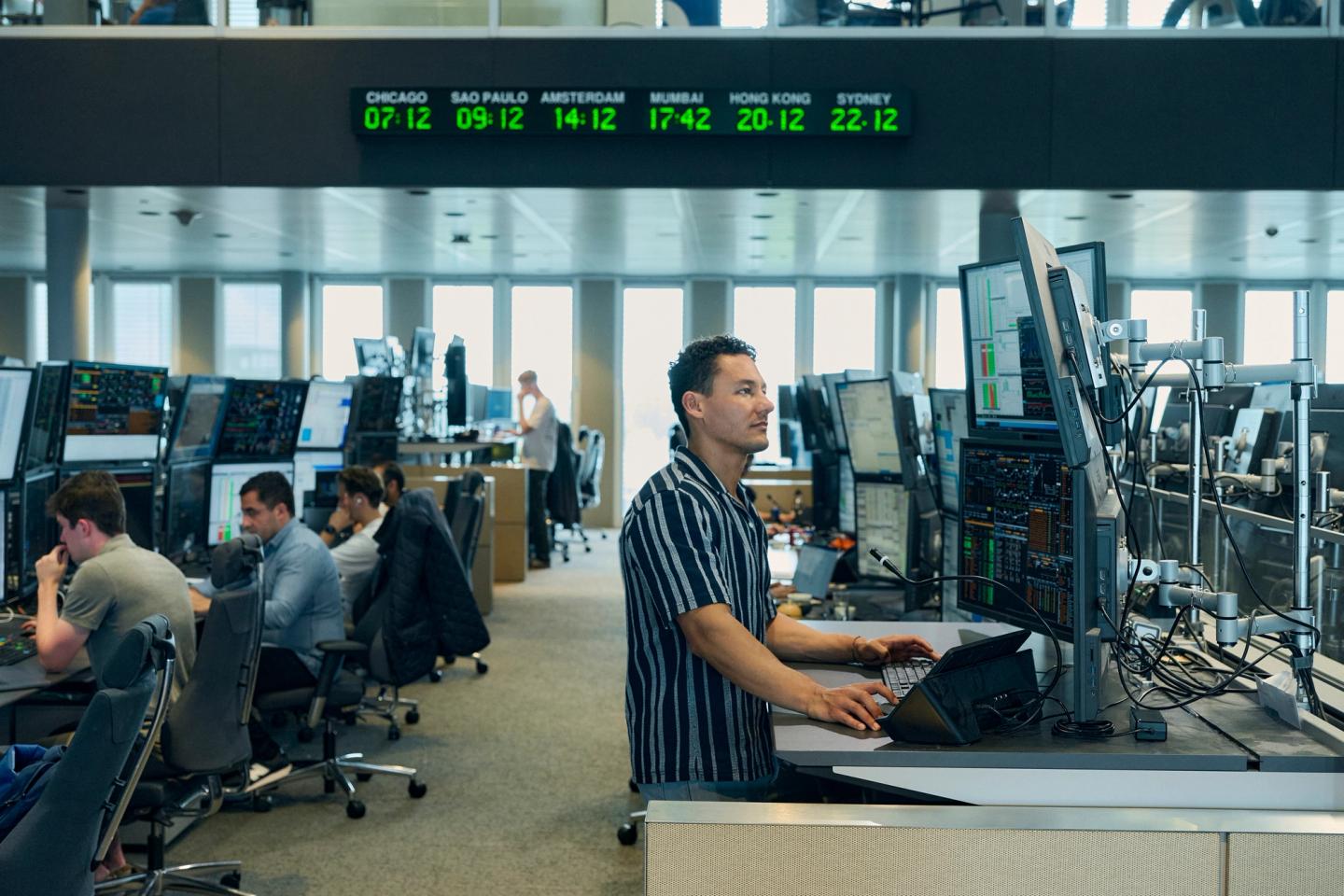
Everyone joins our global traineeship, and careers develop from there based on an individual’s strengths and interests. Over time, people tend to grow towards one or more of a few broad skillsets: deep, longer-term research such as alpha research or pricing and algorithm design; systematic, data-driven trading that focuses on monitoring and optimising live systems; or discretionary, real-time trading that combines technology with market news and experience. These skillsets sit along a spectrum rather than in separate boxes, and it's common to blend more than one, or move between them as your career progresses.
Research and trading both sit at the core of IMC’s business, offering challenging and rewarding career paths for high-performing students, graduates, and experienced professionals alike.
We've designed our trading roles along a spectrum: from quant researchers (encompassing alpha quants, and pricing and algo quants), through quant traders, to operational traders (or VMM traders) at the other end, who combine advanced technology with more instinctive, manual approaches based on deep trading expertise. This enables colleagues to specialize in areas where their strengths give them the biggest edge.
We sat down with two IMCers—a trading lead and an algo quant from our research team—to find out more about each role, how different teams at IMC work together, and what a career at a leading trading firm looks like in practice.
How does the role of an IMC quant trader differ from that of a regular trader?
IMC trading lead (TL): There's really no such thing as a regular trader at IMC. For example, many of our operational traders focus on Valuation Based Market Making (VMM), combining advanced technology with more 'instinctive' manual approaches based on deep trading expertise.
Our quant traders are data-driven and analysis-focused. Their role involves making mission-critical improvements to our trading system, and this is what sets them apart from other traders.
This role also has different specialisms. Some quant traders are closely involved in monitoring and optimising live systems, while others focus primarily on analysing historical trades. In either case, there’s always a strong quantitative and coding element.
How does the role differ between quant research vs quant trading?
IMC algo quant researcher (QR): The focus shifts by desk. On the fastest-moving desks, quant researchers need to be pragmatic and quick-thinking: they come up with rapid solutions and sharpen them against live market feedback. These researchers keep a close eye on how trading strategies are performing in production, so they can quickly incorporate market feedback in their work.
But quant researchers don’t trade themselves and aren’t directly responsible for a trading book. That distance from day-to-day trading gives them the space to work on longer-term, more complex problems that require sustained focus and deeper analysis.
What are problems that only a quant researcher would work on?
QR: There are three main schools of problems that we work on as quant researchers: algorithm design, pricing, and alpha research.
Algorithm design is about confronting complex trading problems in the most rigorous way possible. But solving a problem that’s already in front of you is the easy part. The real challenge is identifying the issue in the first place, and asking smart questions to determine what’s going wrong.
- Pricing is the meticulous process of taking facts about the world, like the price of a stock or current interest rates, and converting them into prices for complex financial instruments.
- Alpha research involves finding systematic ways to make money in the markets, ranging from a regular opportunity (where you can expect a return within a second) to a systemic mispricing that can take months to realise. It means handling vast datasets and identifying innovative opportunities no one has thought of before.
There’s real overlap between these areas—as quant researchers, we switch between different problems and challenges all day, depending on the needs of the business.
Do quant researchers and quant traders work together?
At IMC, our research and trading teams frequently collaborate—leveraging their collective intellect to determine the best trading strategy.
TL: All our teams work extremely closely with each other. It’s a fundamental part of IMC's culture: we deliberately bring together diverse skills to tackle the market’s most complex problems.
QR:And this collaboration extends beyond researchers and traders: our software engineers are just as central to how we work. Because we understand what each team brings to the table, we know how to combine our perspectives effectively. That’s what allows us to go further than any one team could alone.
How does quant research support real-world quant trading decisions?
QR: As quant researchers, our ultimate goal is to influence IMC’s trading strategy and have a positive impact on our trading performance.
So the final output could be a new signal that we’ve developed or back-tested that can be put in front of a trader to inform their decision-making. Or it could be exploring a new trading idea or a solution to an unexpected problem that’s emerged from a recent trading session.
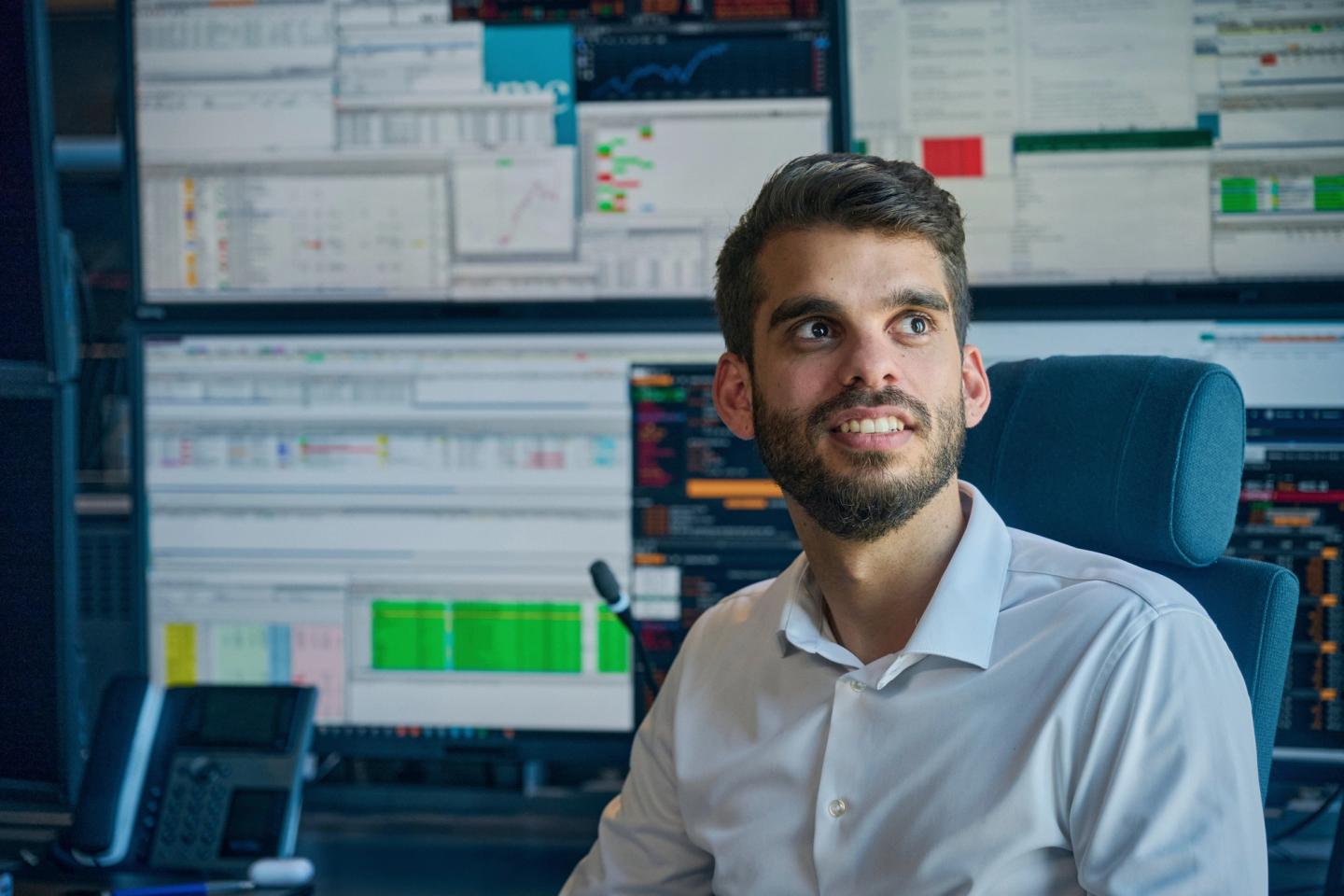
How quant research supports trading: An example
To bring this collaborative approach to life, here’s how a typical IMC conversation between a trader and an algo quant researcher might unfold:
- Trader: I noticed something interesting during today’s session: we were consistently pricing tighter than the market on a specific expiry window. I think there might be a structural dynamic that we’re not capturing.
- Algo quant: That is interesting! Can you pull the data and show me exactly where it was happening?
- Trader: [Shares the timestamps and instruments] You can see it repeating throughout the entire morning session.
- Algo quant: I see it! There’s a liquidity pattern around that expiry that our current model doesn’t account for. Let me dig into this properly.
- Trader: If we can model this reliably, it could be a real edge. Worth a proper investigation?
- Algo quant: Absolutely! Give me a couple of days to build and back-test a module that detects this in real time and feeds it into our pricing strategy. If the data holds up, we can push it to production early next week.
How to get into quant trading and quant research jobs
Both quant trading and quant research jobs require a strong foundation in mathematics, programming, and data analysis. But people take many different routes into these roles at IMC.
What’s a typical educational background for an IMC quant researcher?
QR: Our quant research teams include people with a whole range of degrees and academic backgrounds. Many of my colleagues have a PhD or a Master’s in subjects like statistics or machine learning. Those candidates are likely to go straight into a quant research role on joining IMC.
But it’s also common for people to transfer into our research teams from other roles, having originally joined as graduate traders or even graduate software engineers.
That flexibility is by design: as your career progresses, IMC will move you towards the work that best fits your potential, skills, and interests—and that best suits the needs of the business.
What kind of exposure to quantitative work do quant trading interns or recent graduates receive?
TL: The projects you work on as a trader can be highly quantitative—many of our most talented traders lean hard into that side.
You could be performing A/B testing on a parameter change or actually creating or improving the A/B framework, which is exactly what an intern in the Amsterdam office did last year.
Previous interns have also introduced new statistical methods that have subsequently been put into production.
And that’s just the internship programme: recent IMC graduates enjoy even greater responsibility, and have scope to make their mark on technical, quantitative projects soon after joining a team or desk.
How can someone without a strong research background explore quant roles?
QR: Don’t underestimate how quantitative a trading role can be. Some projects are every bit as rigorous as pure research, and the work you do has direct, real-time impact on our trading performance.
Both research and trading offer competitive, rewarding career paths in their own right. People do move between the two at IMC, and that flexibility is genuinely part of our culture—but either way, you’ll be doing rigorous, high-impact work from the get-go.
TL: I agree. Whether you start in trading or research, you’ll be close to the markets, working on genuinely hard problems, and developing skills that are valuable across both disciplines.
My advice: apply for the path that excites you most; you’ll find more scope to grow and move roles throughout your career than you might expect.
The important thing is to apply and get accepted. Once you’re here, the right path becomes clear fast, and we’ll help you find it!
Quant research vs quant trading: Find your path at IMC
Trading at IMC truly is a spectrum, with deliberate overlap between roles, but also distinct areas of focus for each. Whether you’re drawn to the rigour of long-term research or the pace of live trading, we can offer a path that fits. And if you’re not sure which yet, that's fine: we provide real scope to explore different areas of our business. In fact, many of IMC's most successful researchers started out as traders.
Ready to find your place at IMC? Explore our diverse range of roles and programmes, and find out where your skill and ambition could take you.