How IMC is adopting AI at scale
In October 2025, IMC built its own AI harness for traders and researchers. Within weeks, it had been adopted by every researcher at the firm, in every office, India included.
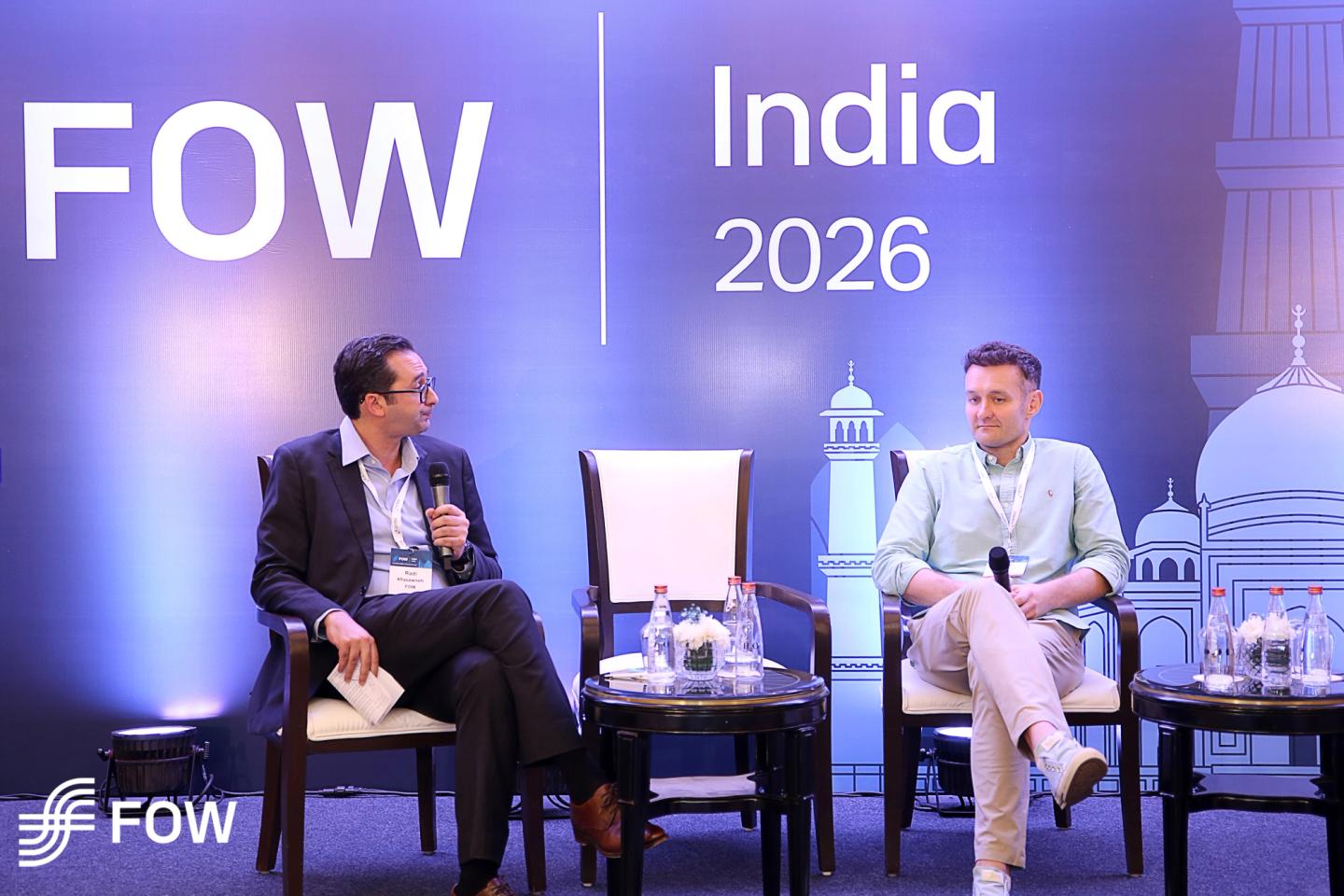
Here are excerpts from a case study discussion at Futures & Options World (FOW) India 2026 featuring Pawel, Head of Technology for IMC’s Mumbai office, on how the firm got there, how it manages AI spend, and where AI meets trading next.
The conversation has been edited for length and clarity.
Q: IMC built its own AI harness for traders and researchers, and within weeks every researcher at the firm was using it. What did it change?
Pawel: For IMC, the biggest change came last year, when the models became powerful enough, and our understanding of how to use them became good enough, to actually create great products. We built our own harness for analysis, so traders and researchers could use AI in a very friendly way to assist their research.
After several weeks, it was being used by all IMC researchers across the globe, including India. The loop from an initial idea, to exploring it, to seeing whether it has legs has been shortened from weeks to hours, which has dramatically increased our velocity.
Q: And for developers?
Pawel: The way we code took a big turn. People are gradually working less and less in the IDEs. Instead, they’re thinking: how can I have the LLM code for me? They focus on prompt engineering, detailed planning, model routing, orchestration and validation instead. What took months to develop, you can now achieve in days. It’s absolutely phenomenal. This will inevitably lead to software factories, where humans are pretty much taken out of the loop. I think we’re halfway there.
Q: Access like that spreads quickly, and so does the bill. For a firm about to roll this out, with costs to understand and a budget to manage, what did you learn?
Pawel: Everybody was super excited and wanted to give it a go. It then spread like wildfire because it’s very easy to use.
There are at least two risks we’ve seen. The first is that costs spiral. They double every month, and you don’t need many months for that to become very substantial. The natural response is to put guardrails on what people can do: limit them to X spend per week/day. We have not taken that approach so far. There is a risk of stifling innovation and sending the wrong message that ‘you shouldn’t use AI as much, because it’s bad for the bottom line’.
Instead, we started educating people and giving them visibility into their spend. They can now track their spend every day/week, and their managers can talk about it with them. Just the awareness makes people think twice about how they spend their tokens.
Then you build your own harness, you build your own way to reduce the cost of using LLMs. We have a dedicated team that evaluates the newest AI models and recommends which to use and with what configuration. We have created default setups, with certain model-routing behaviours, and handle context in a way that manages cost better.
If people are taught how to use it and the default configuration is set up right, the model responds much faster, too. You want a system that tracks usage and spend to find anti-patterns, and then, based on those findings, your developer teams make those anti-patterns difficult by default.
For instance, if the context window grows too large and compaction doesn’t happen early enough, you incur ridiculously high spend because it compounds. If you find those things early and put them in the harness, it compacts the context earlier or prompts the user to change something, and becomes far cheaper to use.
If you teach people well and let them monitor their spend, you’re able to stop this doubling cost. Even as users increased, spend actually went down for us.
I’ve seen projects from non-technical people that made millions for us, where they spent thousands or tens of thousands of dollars over a weekend, but the value was huge. If we had a limit saying you can only spend $500 a week, that project would never have happened.
Q: Cost was the first of the two risks you mentioned. What was the second?
Pawel: People go into autopilot mode. They stop thinking. It’s so easy to keep asking repetitively. You want your leaders, especially managers, to insist that people think. It’s not OK for a developer to use the LLM all the time without knowing what they are doing. Otherwise, you won’t have senior engineers, because you’ve lost the ability to develop critical thinking. Instead, you’ll have people who prompt all the time.
Q: There have never been more AI products being pitched to firms. When do you buy, and when do you build?
Pawel: It depends on your scale. If you’re a small firm or don’t have a strong tech department, you should probably buy. Once you reach a certain threshold, building pays. We started last year with a few people dedicated to AI globally. Now it’s 10x that, and with every addition we’ve created much better products, and the value of those products inside the company becomes much higher.
When you build, you don’t have vendor lock-in. You don’t want to lock yourself into one vendor, because they keep leapfrogging each other. If you build your own harness, it translates the skills, context, and configuration between whichever model you choose. Building your own also lets you put in guardrails and important safety measures for when it touches production equipment, or when you want to make sure information isn’t leaked. Having control over things people don’t fully know how to use yet is very important for us.
And building these things is quite easy, because our developers also use LLMs. They can tailor the product exactly to the needs of the user. What we’ve continuously seen is we create a product, we love it, and maybe six months later there is a similar off-the-shelf product as well. But those six months were very valuable for us.
The question for us was which engineers should build it. We chose to bite the bullet and pull very senior people off projects. You have to start with sacrifices, and the payoff isn’t in the first week. Once we did it the first time, the second was easy, and now it’s natural.
Q: What’s the team building now?
Pawel: Take a context engine. LLMs are so powerful, so how do you give them all the tribal knowledge of your organisation in a scalable, automatic way, so they can use it continuously and hopefully improve on it themselves? We started with experts writing skills and made those skills shareable in our harness across all regions, so someone in the US can find a skill from India, or vice versa. They were still manually maintained by the people who created them, which limited their effectiveness over time.
Now, we’re putting a team on it to make the skills learn from conversations and improve themselves, and add a search index on top. So whenever somebody starts a conversation, they can cheaply and quickly find the right skills. The goal is for everybody in your company to be an expert. It’s a great way to bring new hires up to speed. Then you have evaluations running on top, so as those skills get updated, you don’t sacrifice quality.
If you can install a high-quality, self-maintaining hive mind for the organisation, it is ridiculously powerful, and I don’t think there are very good off-the-shelf solutions for that.
Q: Last one. Across everything we’ve talked about, where does the market stand?
Pawel: It’s very fragmented. The top AI labs are far ahead. When we visit them to look at their latest products, it’s clear the future is incredible, and the spend per user there is like 10x the regular spend. Firms that produce their own models, like Google or Meta, are at the front of the race as well.
Then there are the algorithmic trading firms that develop their own foundation models. You need strong conviction for such a massive investment; you must have already seen something work.
Then there are the firms still operating under the old way of software development, or cutting user spend. It’s a bit like when cars replaced horses: whoever doesn’t get in the car quickly enough and ends up racing on a horse is likely to fall behind.
Ready to make your next move?